Written by the Kanen Coffee service team in Berkeley, CA.
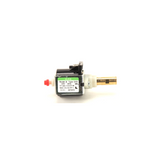
The Ulka EX5 vibratory pump is the closest thing home espresso has to a universal organ. Rancilio Silvia, Gaggia Classic and Classic Pro, most of the Breville range, and dozens of other machines all pump water with the same Italian-made unit. That's good news: when it dies, the part is cheap, the swap is the same job on every machine, and we stock the 120V/60Hz EX5 that US machines take.
Is it actually the pump?
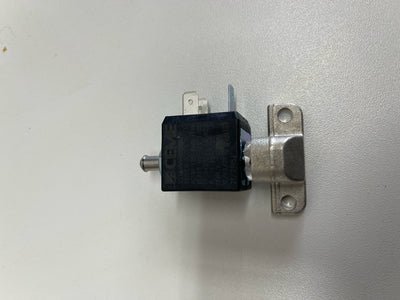
- Loud buzz or rattle, no water anywhere — not at the group, not at the steam wand's hot-water function. That's the classic dead-pump signature. (If water flows somewhere but not the group, suspect the solenoid valve instead.)
- Pump noticeably louder than it used to be, flow weaker — the pump is dying, usually from scale working its internals.
- Total silence when you hit the brew switch — could be the pump, but check the switch and thermal fuse first; a pump usually makes some noise on the way out.
One more check before ordering: run a blank shot with no portafilter. If water flows fine without the portafilter but not with it, your problem is a clogged basket or group — not the pump.
Buying the right pump
Two things matter: voltage (US machines need the 120V/60Hz version — a 230V pump from an overseas seller will barely wheeze) and model (EX5 is the standard; some machines use the EP5 or EX4 variant — if the sticker on your old pump says something else, match it or ask us). The EX5 we stock is the correct fit for the Silvia, Classic/Classic Pro, and the common Breville models.
The swap, step by step
- Unplug, cool down, empty the tank. An hour minimum on the cool-down — the boiler sits close to the pump on most of these machines.
- Open the case. On a Silvia that's the top panel; on a Gaggia Classic the top plate; on Brevilles the outer shell (security Torx). The pump lives in a rubber cradle, usually near the back.
- Photograph everything, then pull the two electrical spade connectors off the pump.
- Free the water lines. Inlet is a push-on silicone hose with a clamp; outlet is a threaded or clipped fitting on the pump's brass head. Have a towel ready — the line holds water.
- Swap the pump in its mounts. The rubber isolators pop off the old pump and onto the new one. They're what keeps a vibratory pump from sounding like a jackhammer — don't skip them, and replace them if they've gone hard.
- Reconnect, prime, test. Hoses first, then electricals, then run the pump with the tank full and the steam wand open until water flows smoothly with no sputter — that's the prime. Check every fitting for weeping before you close the case.
Make the new one last
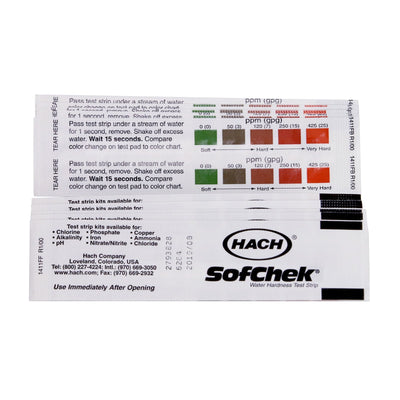
Pumps rarely die of old age around here — they die of scale and of running dry. Keep the tank topped up, and know your water: on the East Bay's harder pockets (El Sobrante, San Pablo, Richmond), test with hardness strips and treat the tank. Our EBMUD water guide has the neighborhood-by-neighborhood numbers.
Rather not open your machine?
Fair. A pump swap is quick work on our Berkeley bench, and while it's open we'll check the valves and descale state that usually killed the pump in the first place — book a repair, drop-off or mail-in.
FAQ
How long does an Ulka EX5 last?
Five to ten years in typical home use on decent water. Hard, untreated water can halve that.
Are Ulka pumps really interchangeable across brands?
Across machines that use the same model and voltage, yes — the EX5 doesn't care whose logo is on the case. Match the model code and voltage on your old pump's sticker and you're safe.
My new pump is loud — did I get a bad one?
Vibratory pumps are inherently buzzy, but if it's worse than before, the rubber mounts are the usual culprit — hardened or missing isolators transfer vibration straight into the chassis.
Shop the gear featured in this article
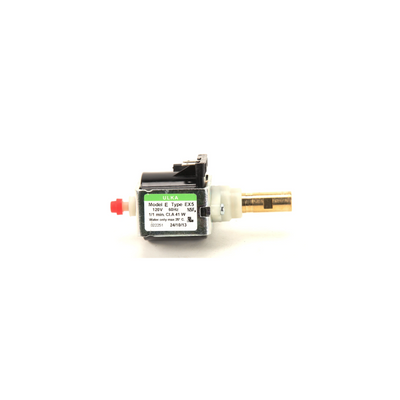
Ulka EX5 Solenoid Vibratory Espresso Pump – 120V 60Hz – Fits Rancilio Silvia, Gaggia, Saeco, DeLonghi
$44.00
Shop Now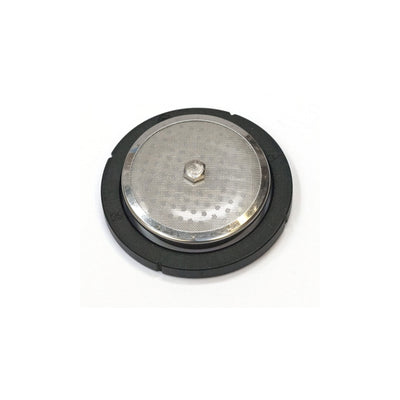
Rancilio Silvia Tune-Up Kit – Fix Leaks & Clogs – Group Gasket, Shower Screen & Retaining Bolt
Sold out
Shop Now