Written by the Kanen Coffee service team in Berkeley, CA. Scale is the #1 machine-killer we see on the bench — and whether it will kill yours depends mostly on which EBMUD treatment plant feeds your street.
Espresso machines die of minerals. So the single most useful thing an East Bay machine owner can know is this: EBMUD does not deliver one kind of water. Six treatment plants feed the district, and their hardness differs by a factor of four to five. Your descaling schedule should depend on which one you're on.
The actual numbers, from EBMUD's own reports
From EBMUD's published water-quality data (ebmud.com/wqr), hardness as CaCO₃ by treatment plant:
| Treatment plant | Hardness (ppm) | Grains per gallon | Verdict for espresso |
|---|---|---|---|
| Walnut Creek | 16–22 | ~1 | Very soft — minimal scale |
| Lafayette | 16–20 | ~1 | Very soft — minimal scale |
| Orinda | 16–23 | ~1 | Very soft — minimal scale |
| Upper San Leandro | ~12–24 | ~1 | Very soft — minimal scale |
| Sobrante | 69–92 | 4–5 | Moderately hard — scale is a real schedule item |
| San Pablo | 76–140 (when in service) | 4–8 | Hard — treat the water, seriously |
Most of the district — including most of Berkeley and Oakland — drinks soft Mokelumne River water via the Orinda, Upper San Leandro, Walnut Creek, and Lafayette plants. The Sobrante and San Pablo plants treat local runoff and serve the district's northwest — El Sobrante, San Pablo, and parts of Richmond, Pinole, and the Kensington hills. (Plants also go in and out of service seasonally — San Pablo sat offline through early 2024 — so boundary neighborhoods can shift between sources.)
Don't guess — test
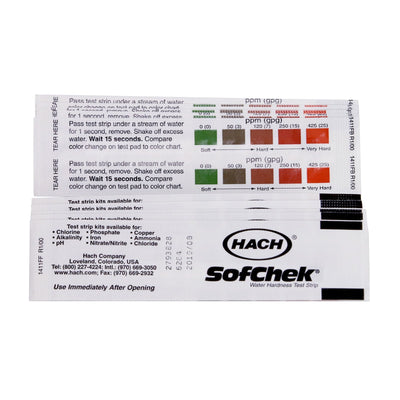
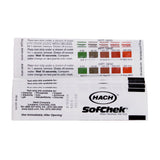
Because plant service areas shift and blend, the only way to know your actual number is a 30-second test with hardness test strips. Under ~2 grains you're in easy territory; at 4+ grains your machine is accumulating scale with every tank.
What to do at each hardness level
If you're on the soft stuff (most of Berkeley/Oakland — ~1 gpg)
- Descale about twice a year for a daily-driver machine. Scale accumulates slowly, but "slowly" isn't "never" — we still pull scale-jammed valves out of Berkeley machines that were never once descaled.
- Skip aggressive softening — this water is already near the soft end of what espresso wants. Over-softened water extracts flat and can slowly corrode boilers.
- One quirk worth knowing: EBMUD raises the pH of the soft-plant water to ~9.2–9.4 for pipe-corrosion control. It's harmless to you and your machine — scale, not pH, is what does the damage.
If you're on Sobrante/San Pablo water (4+ gpg)
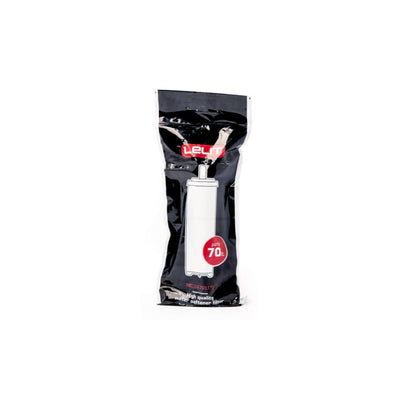
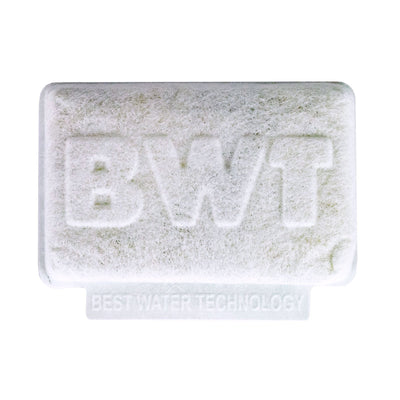
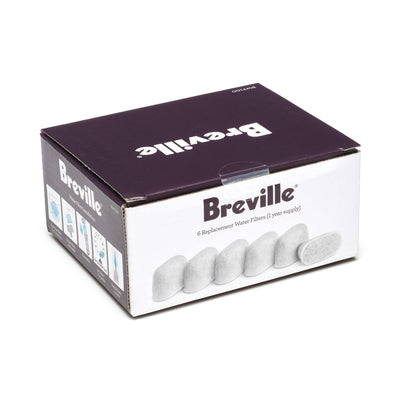
- Treat the tank. For Lelit machines (and any tank that fits it), the Lelit in-tank softener is the cheapest insurance in espresso; the BWT softening pouch does the same job brand-agnostically, and Breville owners should keep the tank filters fresh.
- Descale quarterly, not annually. At 4–5 gpg a daily machine builds scale roughly 4–5× as fast as its Berkeley twin.
- Superautomatics (DeLonghi, Jura) are the most scale-sensitive machines we bench — their thermoblocks have narrow water paths that choke early. Follow the machine's descale prompts and don't snooze them.
Already hearing the symptoms?
A pump that's gotten louder, shots that trickle, a steam wand that's lost its punch, or error codes on a superauto — that's usually scale already in the valves. A descale sometimes fixes it; if a mineral chip has jammed a solenoid, the valve needs to come out. That's what our bench is for: book a repair at our Berkeley shop (2319 Fourth Street) — drop-off or mail-in, any brand.
FAQ
Is Berkeley tap water good for espresso?
Genuinely, yes — at ~16–23 ppm hardness it's soft, low-scale water that most machine manufacturers would consider close to ideal. Descale twice a year and you're covered.
How do I find out which treatment plant serves my house?
EBMUD doesn't publish a street-level map, and plants shift with the seasons. Skip the detective work: test your own tap with hardness strips — that's the number your machine actually sees.
Should I use bottled or filtered water instead?
On the soft plants there's little reason. On Sobrante/San Pablo water, an in-tank softener is cheaper and better than lugging bottled water — and unlike distilled water (which many machines' sensors won't even detect), it keeps enough minerals for proper extraction.