Written by the Kanen Coffee service team. We descale dozens of espresso machines a year — here's everything we'd tell you in person.
Descaling is the single most important maintenance task for an espresso machine, and the most commonly skipped. Skip it long enough and the machine pays you back with a $300+ repair bill, a stuck OPV, or a dead boiler element. Do it correctly and your $2,000 prosumer machine lasts 15 years. This guide covers everything: when, how, what to use, and the brand-specific procedures we follow in our shop.
Why descaling matters (and what scale actually does)
Tap water contains dissolved minerals — primarily calcium and magnesium carbonate. When you heat water, those minerals come out of solution and deposit as solid scale on heating elements, boiler walls, and inside the small-diameter tubes that connect everything. Over time, scale:
- Insulates heating elements. The element has to work harder to reach brew/steam temp. Eventually it burns out.
- Restricts water flow. Tubes narrow. Pressure drops. OPVs misread.
- Sticks valves and solenoids. The most common scale-related repair we see: a stuck 3-way solenoid that won't release pressure after a shot.
- Reduces brew temperature accuracy. Your shots get inconsistent without you understanding why.
Most scale damage is reversible until it isn't. The break-even point is usually around the 18-24 month mark of skipping descaling — before that, a single descaling cycle restores most performance. After that, you're in the "needs a tech to disassemble" zone.
Know your water hardness
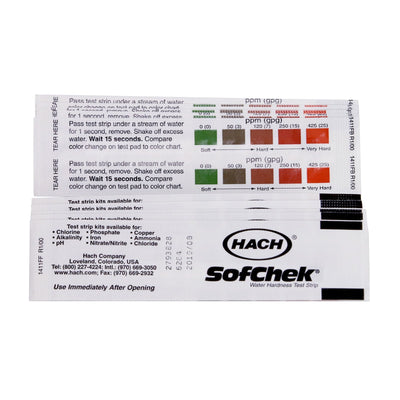
Berkeley/Oakland/East Bay tap water is approximately 120-180 ppm hardness (moderately hard). San Francisco varies. Hardness is the single biggest factor in how often you need to descale.
| Water hardness | Descale interval (without softening) | With in-tank softener |
|---|---|---|
| Soft (<60 ppm) | Every 12 months | Every 18 months |
| Moderate (60-120 ppm) | Every 6-9 months | Every 12 months |
| Hard (120-180 ppm) — Bay Area typical | Every 3-6 months | Every 6-9 months |
| Very hard (>180 ppm) | Every 2-3 months — or use bottled water | Every 4-6 months |
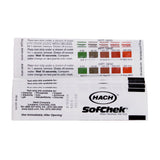
Don't know your hardness? Get a $10 hardness test strip kit (we sell them in the showroom) or call your municipal water provider. East Bay MUD publishes regular water-quality reports.
Descaling vs cleaning vs backflushing — what's the difference?
Three different maintenance tasks people confuse:
- Backflushing — weekly task with Cafiza or similar. Cleans coffee oils and grounds out of the group head and 3-way solenoid. Doesn't touch scale.
- Group cleaning / shower screen — monthly. Remove and soak the dispersion screen.
- Descaling — every 3-12 months depending on water. Removes mineral scale from boilers and internal tubes. The big maintenance event.
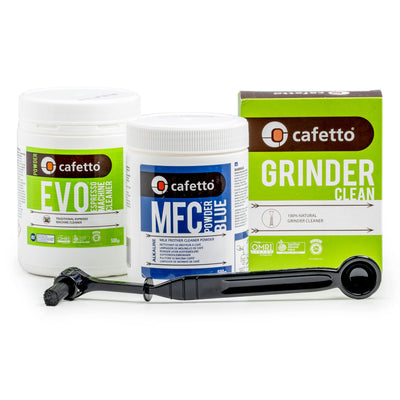
This guide is about descaling specifically. For weekly backflushing, see your machine's manual or grab a tin of Urnex Cafiza.
What descaler to use
Brand-specific recommendations matter. The wrong descaler can void your warranty or damage components. Our recommendations:
- Urnex Dezcal — citric-acid-based, food-safe, works on most prosumer machines. Our default recommendation if your manufacturer doesn't specify otherwise.
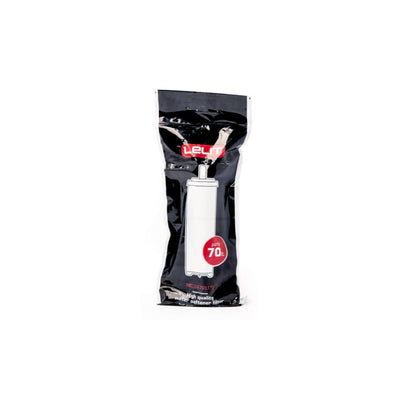
- Lelit-branded descaler — Lelit specifies their own descaler for warranty work. Functionally equivalent to Dezcal but ensures warranty coverage.
- La Marzocco descaler / professional service — La Marzocco saturated groups are more involved than E61 to descale. Most Linea Mini owners have us do this annually.
- Avoid: vinegar, CLR, household descalers. They work but leave residual flavors and can damage rubber seals.
The general descaling procedure (E61 group machines)
This procedure works for most E61-group prosumer machines: Lelit Mara X, Bianca, Elizabeth, ECM, Profitec, Rocket. Adjust quantities per your machine's reservoir size.
- Empty and rinse the reservoir. No old water mixing with descaler.
- Mix descaler per package directions. Typically 1 packet to 1 liter of warm water for Dezcal. Stir to dissolve.
- Fill the reservoir with descaler solution. Refit it.
- Power on the machine and let it heat fully. 15+ minutes for full thermal stability. The hot water activates the descaler.
- Run water through the group head. Place a vessel under the group, lift the lever (or activate the brew switch), and run ~250mL through. Stop. Wait 5 minutes. Repeat 2-3 times. The pause lets the descaler attack scale chemically.
- Run water through the steam wand. Open the steam valve and run ~150mL of solution through. (Stand back — it'll spray.) This descales the steam circuit.
- Open the hot water valve (if equipped). Run ~200mL. Descales that circuit.
- Let the machine sit 15-20 minutes with descaler still in the boilers. Total contact time matters.
- Power off, drain reservoir, rinse thoroughly. Refill with clean water.
- Power on, run 2-3 full reservoirs of clean water through the group, steam wand, and hot water valve. You're flushing every trace of descaler. Don't skip this — leftover descaler tastes terrible.
- Pull a "throwaway" shot. Just to confirm the water tastes clean before you pull a real shot.
Total time: about 90 minutes, mostly waiting. Doable on a weekend morning.
Brand-specific notes
Lelit (Bianca, Mara X, Elizabeth, Victoria)
The procedure above works. Lelit recommends their proprietary descaler for warranty work — but Dezcal is functionally equivalent and we've never seen a warranty rejection over descaler choice. Use the in-tank softener (the Lelit MC747-style softener) and you'll cut descale frequency in half.
Breville (Dual Boiler, Bambino, Barista series)
Breville machines have a specific "descale mode" you trigger from the control panel. Follow the on-screen prompts — they're well-designed. Use Breville's branded descaler ($15) or Dezcal. Don't use citric acid powders that aren't food-grade.
La Marzocco (Linea Mini, GS3)
The saturated group head and copper plumbing in La Marzocco machines benefit from professional descaling. Most Linea Mini owners we work with bring the machine in annually for service descaling — about $225–$450, takes a day. DIY-able but more involved than E61. La Marzocco also recommends running specific water with mineral content rather than RO/distilled.
ECM and Profitec
Same procedure as Lelit. German-made E61 machines with rotary or vibratory pumps. Use Dezcal. Some Profitec models have a plumbed-in descale procedure that's documented in the manual.
Rancilio Silvia
The Silvia's small boiler descales fast. Half a packet of Dezcal is usually enough. Watch the steam wand — it can clog with scale before the boiler does.
Skip-descaling sins (what we see in the repair shop)
The most common scale-related issues that bring machines into our shop:
- Stuck 3-way solenoid. Scale binds the moving parts. Symptom: shot doesn't depressurize after lifting the lever; puck is wet and won't release. Repair: descale aggressively, or replace the solenoid.
- OPV won't open at correct pressure. Scale on the spring or seat. Symptom: shots over-extracting (high pressure) or running fast (low pressure). Repair: clean or replace OPV.
- Heating element burnout. Insulation by scale forces the element to overheat. Symptom: machine stops heating, or trips circuit breaker. Repair: $250–$475 parts + labor.
- Steam wand won't shut off. Scale on the valve seat. Symptom: drip after closing. Repair: rebuild steam valve.
- Brew temp inaccurate. Insulated boiler walls. Symptom: shots taste different despite same beans/grind/dose. Repair: descale aggressively.
If you see any of these symptoms and you haven't descaled recently, descale before you assume the worst. About 60% of "broken machine" calls we get are actually descale-overdue calls.
Make descaling easier (preventive recommendations)
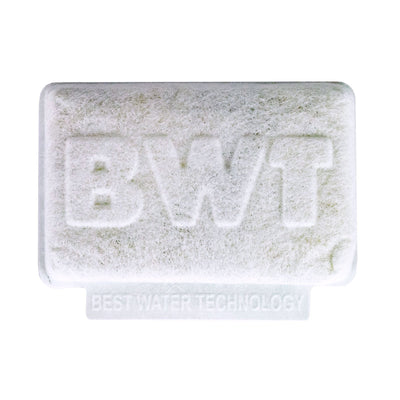
- Use softened or filtered water. An in-tank softener (Lelit, BWT) cuts descale frequency in half. Plumbed-in BWT Bestmax cuts it by 75%.
- Set a calendar reminder. Every 6 months for hard-water areas. Tie it to your tax-filing dates so you don't forget.
- Don't use distilled or RO water. Counterintuitive: distilled water has no minerals, but pure water is corrosive to copper boilers and can dissolve solder joints. Lelit and La Marzocco both recommend mineralized water (50-100 ppm) — softened tap is ideal.
- Buy your descaler in bulk. Dezcal in 4-pack saves 30%. We sell backflushing tablets and descalers in the showroom.
When to call a tech instead
Bring the machine in (or ship it) when:
- You haven't descaled in 18+ months and the machine is showing symptoms.
- You ran a descale and the machine still has problems (likely needs disassembly).
- Your machine has a complex group (saturated, lever, paddle-actuated) where DIY descaling risks damage.
- Boiler-related symptoms (won't heat, slow heat-up, weird smells) — these are usually beyond home descaling.
We do descale services in our Berkeley shop and via mail-in. Book a service appointment or call us at 510-859-4425.
FAQ
Can I use vinegar instead of descaler?
Technically yes, practically no. Vinegar works on scale but leaves residual flavor that takes weeks of shots to flush, and it can degrade rubber gaskets faster than citric-based descalers. Use Dezcal or your manufacturer's branded descaler.
What if I haven't descaled my machine in 5 years?
Don't try to remove 5 years of scale in one descaling cycle — you may dislodge chunks that clog narrow tubes mid-cycle. Run 2-3 descaling cycles spaced a week apart, or bring the machine in for service.
Can I descale a heat exchanger machine same as a dual boiler?
Yes — the procedure is identical. HX machines actually descale faster because there's only one boiler.
Will descaling void my warranty?
Properly performed descaling never voids a warranty. Using the wrong product (vinegar, CLR, etc.) might. Stick with food-safe espresso descalers and you're fine.
How much descaler do I use?
Follow the package. Typical: 1 packet (28g) to 1 liter water. For machines with smaller reservoirs (Silvia at 2.5L, Bianca at 2.5L), one packet is plenty. For larger or commercial machines, use proportionally more.
Sources: Manufacturer maintenance manuals (Lelit, Breville, La Marzocco, ECM, Profitec, Rancilio), Urnex technical documentation, our own service-shop observations across years of repairing scale-damaged machines.