Written by the Kanen Coffee service team — 15+ years repairing the same machines we sell.
If you're shopping for an espresso machine in the $800-$3,000 range, you'll run into three boiler architectures: single boiler, heat exchanger, and dual boiler. Marketing copy makes them sound like a hierarchy ("dual boiler is best"), but the right answer depends entirely on how you actually drink coffee. This guide is the conversation we have with customers in our Berkeley showroom — minus the espresso shots.
The decision tree (read this first)
Two questions narrow it down 90% of the time:
- How many milk drinks do you make per session? Solo espresso: any architecture works. 1-2 milk drinks per morning: heat exchanger or dual boiler. 3+ milk drinks: dual boiler.
- What roasts do you drink? Medium and dark: any architecture pulls great shots. Light, modern, third-wave roasts: dual boiler with PID brew control gives you the precision the beans need.
That's it. The rest is detail.
Single boiler — the entry-level workhorse
How it works: One boiler heats water for both brewing and steaming. Brew temp around 92-96°C; steam temp around 130°C. To switch between functions, the machine heats up or cools down — and you wait.
What buyers feel day-to-day: You pull a shot at brew temp, then press the steam button, wait 30-60 seconds for the boiler to climb to steam temp, then steam your milk. To go back to brewing, you flush water through the group to bring the boiler back down to brew temp. It's a workflow tax — manageable for a single drink, painful for two.
Who it's right for: Solo espresso drinkers who occasionally make a milk drink. Households on a budget who want to learn proper espresso fundamentals. Anyone who values mechanical simplicity (single boilers have fewer parts to fail).
Who should skip it: Two-drinker households. Anyone making 2+ milk drinks per session daily. Buyers who hate waiting.
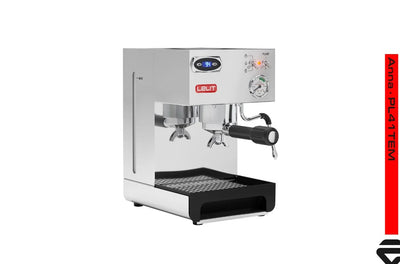
Machines we recommend in this category: Lelit Victoria ($999) is our pick — brass boiler, PID, 58mm commercial portafilter. Modded Gaggia Classic Pros work great if you enjoy the project.
What we see in the repair shop: Single boilers are the most reliable architecture we service. Fewer solenoids, less plumbing, less to break. A well-maintained Victoria will outlast most expensive prosumer machines.
Heat exchanger (HX) — the practical sweet spot
How it works: A single boiler holds water at steam temperature. A small tube — the heat exchanger — runs through the boiler. Brew water passes through this tube on its way to the group head, picking up heat as it goes. Result: instant access to both brew and steam without waiting.
The traditional HX problem: Water sitting in the heat exchanger between shots gets superheated. Most HX machines require a "cooling flush" — running water through the group for a few seconds before each shot to clear out the overheated water. It's an extra ritual.
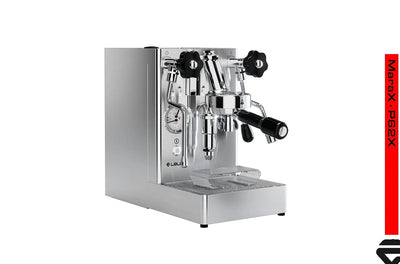
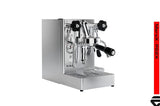
The Lelit Mara X solution: Lelit patented a boiler management system that keeps the HX water at brew temperature even when idle. No cooling flush, no overshot first cup. This is the reason the Mara X ($1,699) is the best-selling machine in our showroom and probably the most underrated machine in espresso.
Who it's right for: 1-2 daily milk drinkers who want simultaneous brew and steam without dual-boiler price. Medium-roast drinkers. Anyone who appreciates "buy once, never think about it" engineering.
Who should skip it: Light-roast specialty coffee chasers (HX brew temp control is good but not 0.5°C-precise). 3+ milk drink households (HX boilers are smaller than commercial dual boilers and steam pressure drops on extended sessions).
What we see in the repair shop: Mara X is one of the most reliable machines we service. We almost never see boiler failures. The standard E61 group gasket needs replacing every 12-18 months ($4 part) and steam valve seals occasionally around year 5.
Dual boiler — independent control
How it works: Two separate boilers — one dedicated to brewing, one to steam. Each has its own PID temperature controller. You brew and steam simultaneously with no compromise on either function.
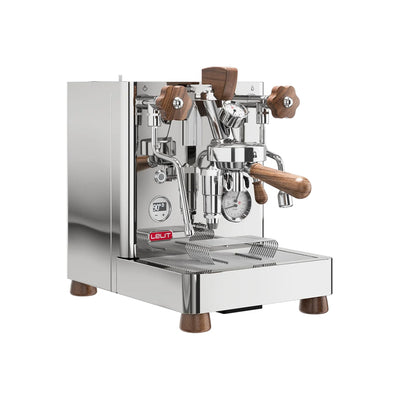
What buyers feel day-to-day: Pull a shot while texturing milk for a cappuccino — both happen at the same time. Adjust brew temperature in 0.5°C increments via the display. The Lelit Bianca adds flow control on top of that for shot profiling.
Who it's right for: Two-drinker households making milk drinks back-to-back. Light-roast specialty coffee drinkers who taste the difference between 92°C and 93°C. Anyone planning to keep one machine for 15+ years and wants no architectural compromises. Light-roast Nordic-style espresso chasers.
Who should skip it: Solo medium-roast drinkers — you're paying for capability you won't use. Anyone planning to use the machine 1-2 times per week (the maintenance scaling on a more complex machine isn't worth it for low usage).
Machines we recommend: Lelit Elizabeth V3 ($1,799) for compact dual boiler. Lelit Bianca V3 ($2,999) for dual boiler + flow control + bigger steam capacity. Step up to La Marzocco Linea Mini ($6,600) for commercial-tier engineering.
What we see in the repair shop: Dual boilers have more failure surface area than HX or single-boiler machines (more solenoids, more plumbing) — but Lelit and La Marzocco's manufacturing tolerances are good, and we don't see early failures. Filter your water; the most common failure mode at 5+ years is scale-related.
The honest summary
| If you... | Pick... |
|---|---|
| Drink straight espresso, occasional milk drink, want to spend <$1,200 | Single boiler (Victoria) |
| Make 1-2 milk drinks daily, want zero workflow friction, $1,500-$2,000 budget | Heat exchanger (Mara X) |
| Make 2-3 milk drinks daily, want compact dual boiler under $2K | Dual boiler (Elizabeth V3) |
| Chase light roasts, profile shots, plan to keep one machine 15+ years | Dual boiler + flow control (Bianca V3) |
| Want commercial-tier engineering and don't mind paying for it | Saturated group dual boiler (Linea Mini) |
Want to feel the difference yourself?
The fastest way to make this decision is to pull shots on each architecture in person. We have most of these machines on our showroom floor in Berkeley — Lelit Victoria, Mara X, Elizabeth, Bianca, plus a La Marzocco rotation. Book a buying consultation and we'll set up a side-by-side. No pressure, no upsell — just espresso.
📖 More From Our Service Team
- Lelit Bianca V3 vs Mara X
- Mara X vs Elizabeth V3
- Bianca V3 vs La Marzocco Linea Mini
- Victoria vs Silvia Pro vs Gaggia Classic Pro
- Best espresso grinder under $1,000
Sources and references: The "what roasts × how many milk drinks" decision framework is the consistent consensus across home-barista.com HX-vs-DB threads and r/espresso machine recommendation discussions over the past several years. Lelit's HX management approach on the Mara X is documented at Lelit. Repair-shop observations are from our own Berkeley service work since 2010.