We get this question constantly. We are in a unique position to answer it — because we fix both brands every week. This is not a review from someone who bought one of each and made lattes for a month. This is a comparison from technicians who have opened up hundreds of these machines, replaced their parts, diagnosed their failures, and talked to their owners about what long-term ownership is really like.
The short answer: both are good machines, but they are built for different types of owners.
Build Quality and Materials
Breville
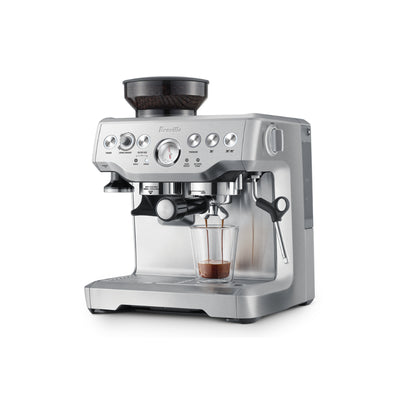
Breville machines are thoughtfully engineered consumer products. Solid build quality for the price — stainless steel exteriors, well-tested electronics, and a mix of plastic and metal internal components engineered for cost and mass-market serviceability. The Barista Express (BES870), Barista Pro (BES878), and Barista Touch (BES880) are the models we see most in our shop. They are genuinely good machines — easy to use, feature-rich, and accessible. The thermojet heating system reaches temp in under 3 seconds. For someone who wants great espresso with minimal fuss, Breville delivers.
Lelit
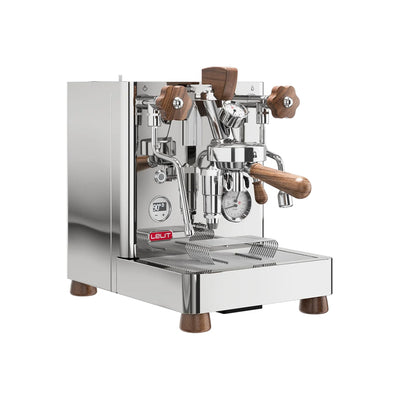
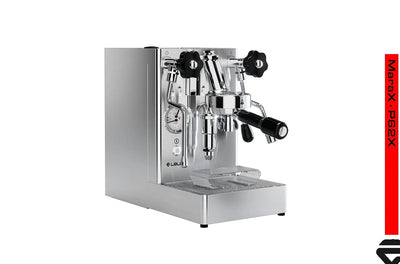
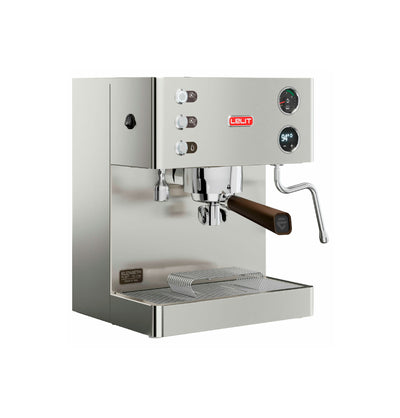
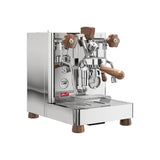
Lelit is an Italian manufacturer building machines for the prosumer market — people who are serious about their espresso and want a machine built to last. Internal construction uses higher-grade components: brass boilers, stainless steel tubing, quality solenoid valves, commercial-grade pumps. When you open a Lelit, you see a machine designed with longevity in mind. The Lelit Bianca (PL162T), Elizabeth (PL92T), and Mara (PL62X) are machines we sell and service. They are heavier, more expensive, and require more user involvement — but they reward that engagement with a dramatically better espresso experience and a longer service life.
Reliability: What We See in the Shop
Most Common Breville Failures
- 3-way solenoid valve failure — one of our most frequent Breville repairs. In the BES870 and similar models, this valve wears out around the 2–4 year mark with regular use. Replacement part: $95 in our online store. Repaired in-shop: typically around $310 ($125 part + labor).
- Scale damage to thermocoil — Breville's thermocoil system is efficient but has narrow internal passages that scale up faster than traditional boilers. Thermocoil failures are common in hard water areas without regular descaling.
- Grinder motor issues — the integrated grinder on the Barista Express adds a second potential failure point (burr wear, motor issues).
- Circuit board failures — Breville electronics can be sensitive to voltage spikes. Use a surge protector.
Most Common Lelit Failures
- Group head gasket wear — normal consumable wear. Lelit gaskets are standard sizes: $5 and 15 minutes of your time. We will walk you through it.
- Pump replacement — Ulka vibratory pumps have a rated service life. Replacement is straightforward — the Ulka EX5 pump is $44 in our online store ($75 installed during a repair).
- Flowmeter issues — volumetric flowmeters on the Bianca and Elizabeth occasionally need cleaning or replacement. Less common.
The Verdict on Reliability
Lelit machines typically outlast Breville machines with proper maintenance. A Lelit Mara or Bianca with regular care can run 10–15+ years. We have customers with Lelit machines from 2012 still pulling excellent shots. Well-maintained Breville machines can run 7–8 years. The ceiling for Lelit longevity is simply higher.
True Cost of Ownership
- Breville Barista Express — ~$700 purchase price, $300–$700 common repair, repair frequency every 2–4 years, 5–8 year expected service life
- Lelit Bianca — ~$2,000 purchase price, $80–150 common repair, repair frequency every 4–7 years, 10–15+ year expected service life
The Bianca costs nearly 3x the Barista Express upfront. But spread over 12–15 years of use with lower repair frequency, it is often cheaper long-term — and the quality of espresso it produces is in a different league.
User Experience and Learning Curve
Breville wins on ease of use. The Barista Express or Barista Touch let you pull a decent shot within days. The integrated grinder, pre-infusion, and programmable settings are accessible for espresso newcomers. The Barista Touch even has a guided mode with built-in recipes.
Lelit rewards engagement. The Bianca has a manual pressure paddle for pressure profiling — you control the ramp-up and flow through the puck. This produces extraordinary espresso in skilled hands. Budget a few weeks of dialing in before you get consistently great shots.
Who Should Buy a Breville?
- You are new to espresso and want to learn without a big upfront investment
- Convenience matters — one machine with integrated grinder, minimal setup
- You want a capable machine under $800
- You pull 1–2 shots per day and do not want to get deep into the craft
Who Should Buy a Lelit?
- You are serious about espresso and want a machine that grows with your skill
- You own or plan to buy a quality standalone grinder
- You want a machine that can last 10+ years with proper care
- You value repairability and long-term parts availability
- You want pressure profiling and precise temperature control
Our Recommendation
We sell both. We repair both. We recommend both — in the right context.
Just starting out? Breville is a great entry point. Ready to take espresso seriously, or upgrading from a machine you have outgrown? Invest in a Lelit. We particularly love the Bianca for home baristas who want the feel of a commercial machine.
Come visit us in Berkeley, or call or email — we are happy to spend 20 minutes helping you find the right machine for your lifestyle and budget.
Questions? (510) 859-4425 | service@kanencoffee.com | Browse our machines